
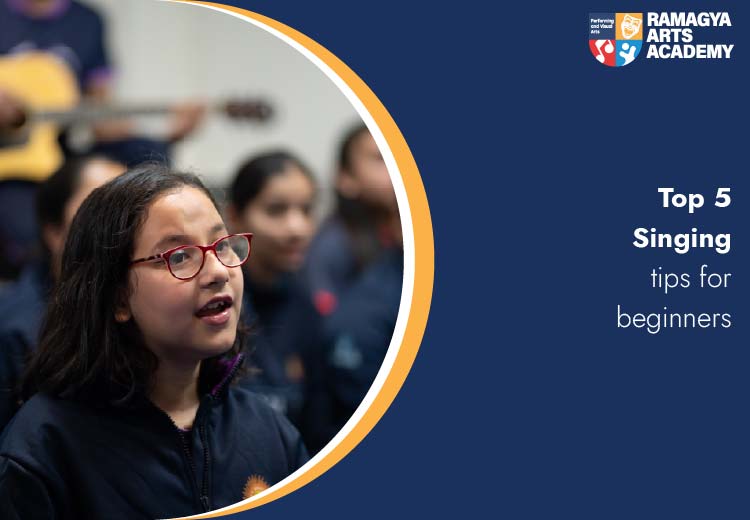
Top 5 Singing tips for beginners
Singing is perhaps the best way to express your feelings. Be it singing your favorite songs in the shower, performing in front of a large audience, or just to improve the tone of your voice, developing your singing abilities is one enjoyably long process.
Coming to the basics, many beginners have a lot of queries. Is it necessary to have a naturally pleasant voice for singing? Is singing an innate ability? Is it feasible to be a good singer?
Actually, the process of developing your voice is similar to a sport. It can be learned, practiced and improved. But one can not achieve all these without the knowledge of right and basic techniques.
This article covers the 5 basic tips which will help you hone your voice, gain confidence and add to the pleasure of singing.
Basic Singing Techniques
Before delving deeper into the art of singing, it is essential to have a basic understanding of the anatomy of the singing instrument (i.e your voice). The process involves listening and involving the emotions, control of your voice and of course, effective breath support. With these knowledge and techniques, you can-
- Improve the resonance of your voice
- Hit the notes accurately
- Understand the rhythm and pitch
- Sing long without voice fatigue
- Confidently perform in front of others
- Achieve more with your singing practice
Top 5 Singing Tips For The Beginner
TIP 1: Know How to Breathe
Of the singing tips below, this one is the single most important. It’s rather simple to understand why correct breathing is critical. Air is a requirement to generate any sort of audible sound. It’s the same principle as blowing up a balloon. Singing requires air, and for air to flow steadily, one needs to breathe correctly.
- Improving your breathing:
- Sit/stand up straight
- Relax shoulders/neck
- Take a comfortable deep breath and allow your lower ribs to expand.
- Breathe out slowly while making a soft sssssss sound
In time your breath will become controlled allowing for the gentle and easy expulsion of air. It will allow you to extend your breath and not run out of air while singing long phrases.
A simple exercise is to breathe in for the count of four and out for the count of six. Repeat a few times until your breath is controlled and steady.
2. Warm Up Your Voice Before Singing
Just like athletes warm up before a game, singers should do warm-ups before jumping into a high note. Doing warm-ups helps singers ease from speech to the singing voice. Here are some warm-ups:
- Humming: Find a comfortable note, and then hum it.
- Lip Trills: Relax your lips, and then blow air through your lips to create a soft humming sound.
- Scales: Sing a few notes in your singing range. Go as low as you can, and then as high as you can.
- Sirens: Like a scale, but the note shifts and glides between comfortable low and high notes.
Try these warm-ups for five to ten minutes, and then sing your favorite song! Do not push your voice to go higher or lower. Rest and relax your throat if it starts feeling uncomfortable.
At Ramagya Art Academy, children learn the basics of singing in a structured manner and learn the techniques step by step to give them the confidence to sing in front of people.
3. Learn to Sing in the Right Pitch and Rhythm
Pitch is the highness or lowness of a note. Rhythm is the timing and flow of the music. If you can notice both of these elements in music, then you can clearly figure out how to perfectly sing a song.
- Listen carefully when learning a new song.
- Initially, stick to simple songs. Avoid complicated songs with irregular rhythms and unusual phrasing.
- You can match single notes on a keyboard.
- You can use clapping or other percussion to help capture the song’s beat.
- Listen to yourself sing and see what you can do to improve.
You can pick a melody with three or four notes and practice singing it. Try to sing every note in the song as accurately and on pitch as possible.
Using these practices, you can gradually improve your skills. You can improve your overall ability to hear notes and sing in tune. It won’t happen perfectly right away, so don’t get frustrated. Aim for gradual, steady improvement.
4. Practise Regularly and Stay Consistent
One of the biggest beginner mistakes is practicing for hours only to not sing at all for the rest of the week. With anything new, learning to sing requires consistency. You don’t need to practice for hours every day. Short practices work better than long, occasional ones.
A simple routine:
- Set aside 15-20 minutes (or however long you feel comfortable practicing for)
- Breathe gently and do some warm-ups
- Practice a few scales or a short melody
- Pick a song that is appropriate for your level
- Record yourself and listen back to hear your progress
I suggest practicing at a time of day where you feel the most alert and ready to go. You can even keep a small practice journal. It can look like this:
M: Breathing exercises
T: Warm-ups and scales
W: Pitch practice
R: Rhythm and melody
F: Favorite song
S: Relaxed singing
With a routine like this, you can take breaks and rest your voice when you feel it needs it. This will help you learn what your voice can do and help you gain confidence with practice.
5. Building Confidence: Start Simple
Many beginners want to sing popular, difficult songs by their favorite artists. It’s understandable to want to sing like those you admire, however, it can be discouraging to try to sing beyond your abilities and vocal range. So, pick songs that cover your vocal range by finding songs with notes that are easier for you to hit. Some tips:
- Look for simple melodies
- Avoid songs that have very high or low notes
- Look for songs with a slower tempo to better understand timing
- Pick songs that you enjoy listening to
- Practice smaller song sections before attempting the entire song
And, of course, remember to build confidence by singing in front of more people as you feel ready. It’s okay to make mistakes. Every singer practices and performs to learn the craft.
Some Common Singing Mistakes to Avoid
In the process of improving your singing, you will also want to avoid habits that can hinder your progress like:
1. Singing too loudly
2. Not warming up your voice
3. Trying to emulate professional singers note for note
4. Ignoring your breathing
5. Practicing when your voice is tired or in pain
Benefits of Singing Classes
Practice is important, but singing lessons give you a leg up when explaining techniques. Great beginning singing classes have:
- Personalized instruction according to your learning style.
- Lessons on breathing, pitch and rhythm.
- Regular feedback on areas to work on.
- Opportunity to work on various types of music.
- Positive environment to work on confidence.
A good teacher will help correct mistakes you’ve made and will help you work on troublesome areas. Both guided practice and home practice will help you with long term improvement.
Also Read- Best Music Academy in Noida – Ramagya Arts Academy
Conclusion
Learning to sing takes persistence and practice, as well as the will to improve. You don’t need to be born with a perfect voice to begin; with a foundation of basic singing skills and regular practice, you’ll be on the right path to improving your voice.
- Things you can practice
- Proper breathing
- Practice Pitch
- Regular Practice
- Practice Warm-ups
- Choose the right song for your voice
Tips and tricks will help with the basics and with practice you will be on your way to becoming a more confident singer. Whether you wish to sing for enjoyment or if you wish to perform, the habits and practices will help you in the long run.
If you wish for guided practice, you can reach us at Ramagya Art Academy.
We believe with the right direction and practice, anyone can learn to enjoy music and discover their voice.
Frequently Asked Questions (FAQs)
1. Can I learn singing if I am a complete beginner?
Yes, of course! Singing is a skill that can be developed. Beginners can start with the basics like breathing techniques and simple notes, before advancing to more difficult songs.
2. How much time should beginners practise singing every day?
15 to 20 minutes of focused practice is a good starting point. Increase practice duration, if your voice feels good, otherwise, stick to the duration. Breaks are important.
3. What are the best vocal exercises for beginners?
Humming, lip trills, practicing scales, breath control exercises and pitch-matching activities are some good exercises.
4. How long does it take to become good at singing?
There is no standard period. With consistent practice under the right guidance, some see improvements in a few weeks, while others take months or years to get advanced skills.
5. What is the best way to improve singing at home?
Follow a consistent and simple practice routine, do some warm ups, and record yourself to analyze your voice and identify improvements. Guidance from a teacher always helps.