Is Kathak Difficult for Beginners?
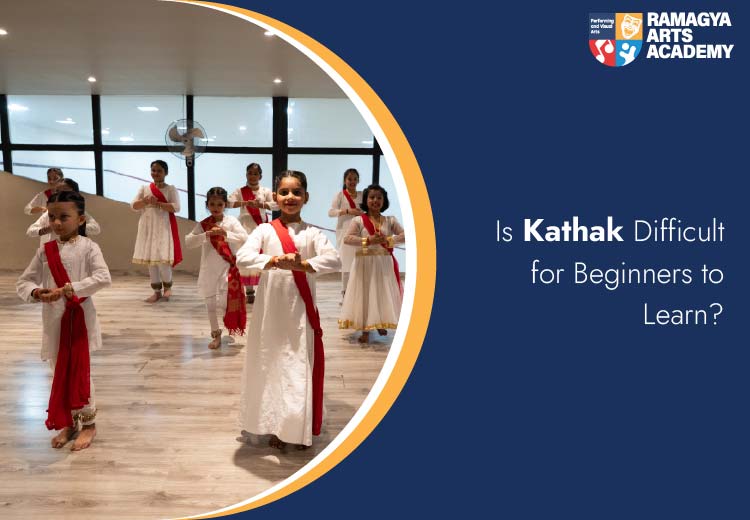
Have you wondered how the dancers in Kathak performances make their feet move so quickly and perfectly? The footwork and the hand gestures make for beautiful performances. But if you’ve never danced before, it may look a little scary.
A question beginners always have is “Is Kathak difficult to learn?”
The answer is no. Kathak takes a lot of practice, but it is not something you cannot learn because you don’t have any dance experience.
If you are looking at Kathak classes in Noida, being aware of how this particular dance form is taught may help with your first class.
What is Kathak Dance?
Kathak is one of the eight classical dance forms of India. This dance form is from Northern India and is known for its storytelling and footwork.
The word “Kathak” comes from Sanskrit word “Katha” which means story. Earlier, dancers used different movements, gestures and facial expressions to tell different stories. Now, a variety of age groups (from children to adults) learn Kathak for enjoyment and as a hobby.
Some of the components of Kathak are:
- Tatkar: Basic foot work in different patterns of rhythms
- Chakkars: Controlled spins in Kathak.
- Mudras: Different hand gestures that express different meanings.
- Abhinaya: Expressions of different feelings with movements of face and body.
- Taal: Different rhythms
Initially, beginners practice various footwork exercises to practice footwork and movement. Later on they learn difficult combinations.
Is Kathak Hard to Learn for Beginners with No Dance Experience?
Not at all! In fact, one of the best things about Kathak is that you are not required to have any dance training to start learning. Like any other instrument, language, or skill, it takes time, effort, and practice.
Also, the footwork and patterns can feel overwhelming at first. This is completely normal. You might feel lost when attempting Tatkar, for example, because at the beginning you are required to practice very basic foot movements and attempt to match the counts. This can feel very confusing, but with lots of practice, it gets easier and becomes second nature.
Also to add,
- It doesn’t matter if you don’t have any dance experience
- You can learn and start Kathak at any age
- You learn movements from easiest to hardest
- It’s better to practice more regularly
- Everyone learns movements at their own individual pace.
Your end goal for your first classes is not to master and dance the movements perfectly. Your end goal is to learn the basics, understand the movements and structures of Kathak and have fun with the process!
What is Difficult About Learning Kathak as a Beginner?
Kathak is easy to pick up, but it’s always good to know the hard stuff as well.
1. Learning the Footwork
One of the key aspects of Kathak is footwork. Beginners tend to have trouble remembering footwork patterns and keeping them in time with the music. Practicing footwork with slow tempos helps. Being comfortable with a pattern helps with remembering it. Then the tempo can be gradually increased.
2. Balance in Chakkars
Spins are one of the more recognizable features of Kathak. Beginners tend to wonder how dancers perform a large number of spins without losing their balance. This is gained through hours of practice and with the right technique. Beginners, however, start with smaller, easier to control, turns, which are then increased with the guidance of the teacher.
3. Combining Hands, Feet and Expressions
This can be a challenging aspect for beginners. However, this is broken down into its individual components (footwork, hand gestures, facial expressions) and then joined together to create a sequence.
4. Identifying Rhythm and Taal
Being a part of Indian classical music, Kathak has many similar aspects. Teentaal is one of the rhythm cycles that is taught in the beginning and followed. With training and guidance this becomes easier. It is also very important to be constantly listening to the beats.
What Happens During The First Few Classes of Beginners’ Kathak Classes?
Parents who want their kids to learn Kathak in Noida have a lot of questions, and rightly so. As the child is new to Kathak, the teacher is also new to the child. Most beginner-level classes are designed to develop the foundations and not teach performances. So a typical journey looks like this:
| Stage | What beginners learn |
| First few classes | Basic posture, simple footwork |
| Foundation stage | Tatkar, hand movements and basic rhythm patterns |
| Skill building stage | Simple chakkars and expressions |
| Further learning | Dance combinations, dance compositions |
| Advanced learning | Various rhythms and compositions |
The process is slightly different for kids, teens and adults. For young kids, it is all about rhythm, movement and coordination. For older teens, it can develop as an expressive art form. The focus for older beginners is on technique and expressions.
At Ramagya Arts Academy, we want to create a safe space for students who are interested in Indian classical dance in order to help them learn various facets of this highly disciplined form of dance.
How Long To Learn Basic Kathak?
It takes a few months to learn the basic footwork of Kathak but the time may vary from individual to individual depending on how often one practices or attends classes, how quickly one is comfortable with the movements and how regularly one practices.
Learning the basics doesn’t take much time but building up a strong base and learning multiple layers of Kathak compositions takes time through regular practices.
There are unlimited layers to this dance form and it is best to learn and take time on each layer, rather than rushing to complete a level and learning incorrectly. One must take time on every layer to master all the movements of that particular level.
Kathak also helps in improving confidence and concentration of an individual.
Benefits of Learning Kathak Also Includes:
- Improved Balance and Coordination
- Building Body Awareness.
- Creative Expression.
- Connection with Indian Culture.
Kathak is an established classical dance form that has layers and teaches individuals about our culture and classical music and stories.
Choosing Best Kathak Classes in Noida
Beginners need to feel confident about joining the class, this is why one must see if the following is present before joining a class.
There is a competent teacher who is capable and able to explain classical dance in simple words.
Simple Tips to Easily Learn Kathak
It can get a little overwhelming when first starting out with Kathak. Using the following tips can really help.
- Practice: consistent practice helps with muscle memory
- Patience: work on the basics
- Classical Music: it helps with understanding rhythm
- Questions: don’t be afraid to ask for clarification
Improvements: Keep a look out for minute improvements rather than obsessing about perfection. Progress and practice are more important than anything.
Conclusion
Is learning Kathak difficult? There are some parts that take time but overall it isn’t too difficult and can be really fun. For more information about upcoming classes, look into Ramagya Arts Academy.
You will learn the basics of Kathak dance in no time if you just take that first step. This dance style requires regular practice. You will then be surprised by the pieces you will add to your repertoire over time.
Frequently Asked Questions (FAQs)
1. Is Kathak easy to learn for complete beginners?
A beginner can learn Kathak without any previous dance experience. Classes cover the basics like posture and footwork and the rest of the lesson covers steps and rhythms.
2. How long does it take to learn the basic steps of Kathak?
It varies from student to student. You will be surprised to see beginners understand and perform the basics of this dance style within a few months of regular classes.
3. Is it possible for beginners to join Kathak classes in Noida without knowledge of classical dance?
Yes, you do not require any knowledge of classical dance to join beginner classes. The basics of this dance style are step by step explained to beginners.
4. Can children learn Kathak?
Kathak can be learned by children also. It helps children develop an understanding of basic elements of dance like rhythm and coordination.
5. Is there anything in particular that I must look for when choosing Kathak classes in Noida?
Look for teachers with proper training, beginner-friendly lessons, a clean practice room, and a good environment where students are free to learn at their own pace.